Plan your visit
Whether you are bringing a university research team, leading a school field trip, or attending one of our programs, we are happy to help you plan everything from research objectives to s’mores around the campfire. Tell us what you hope to accomplish, and we will work with you to make the most of your time at CETL. For more information, please reach out to team@cetlmaine.org.
On-Site Learning & Facilities
-
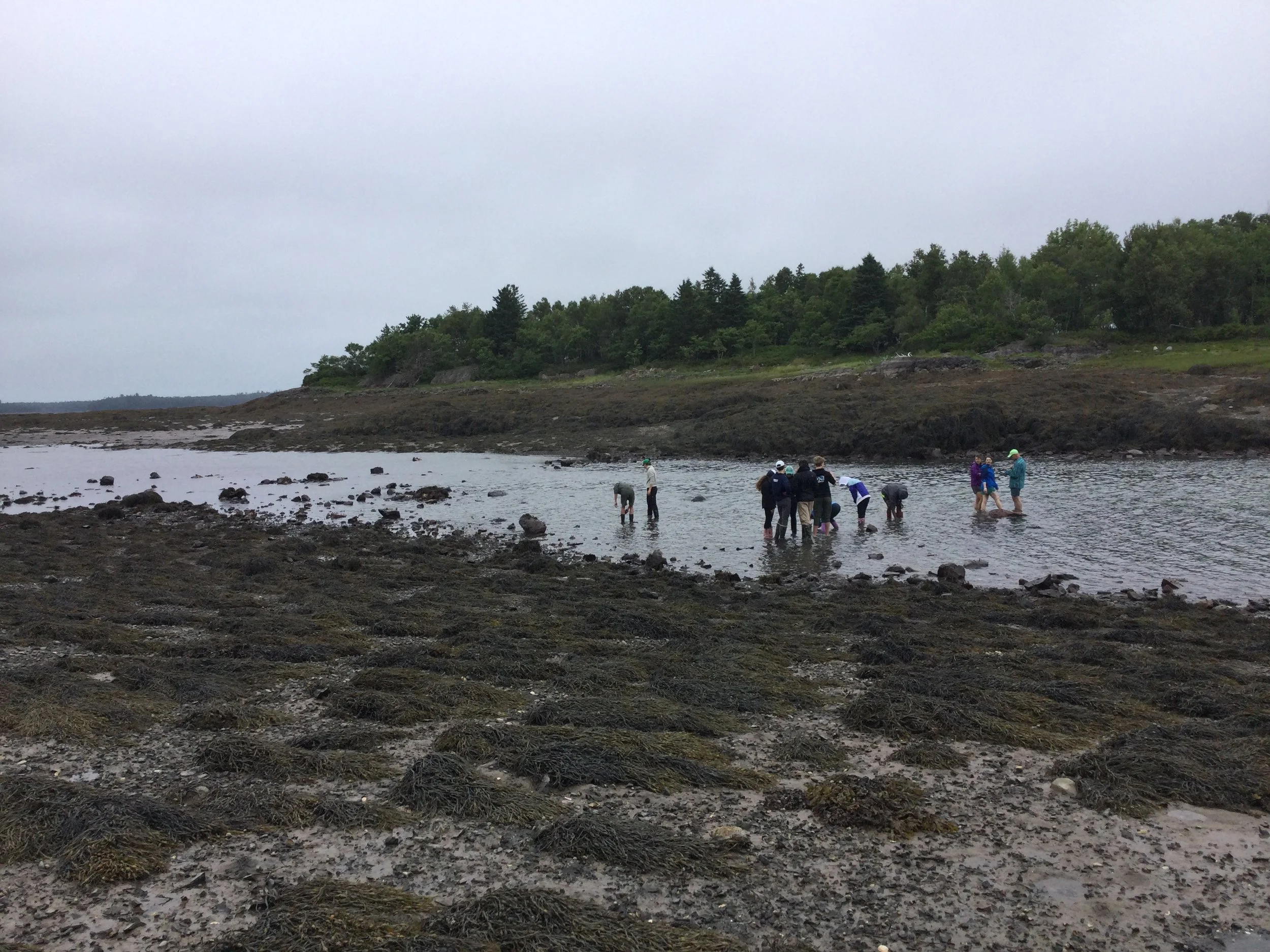
Our campus offers wooded trails and a half mile of shoreline with abundant marine life. Habitats on-site: rocky intertidal, mud flat, cobble beach, salt marsh, tidal creek, field, spruce-fir and hardwood forest
-
Our dining hall also serves as a group meeting space with a screen for presentations and a wifi connection.
We have renovated our wet lab building and anticipate installing equipment during the summer of 2026, including tanks and dissecting microscopes.
Rubber boots are avialable for tidepooling.
-
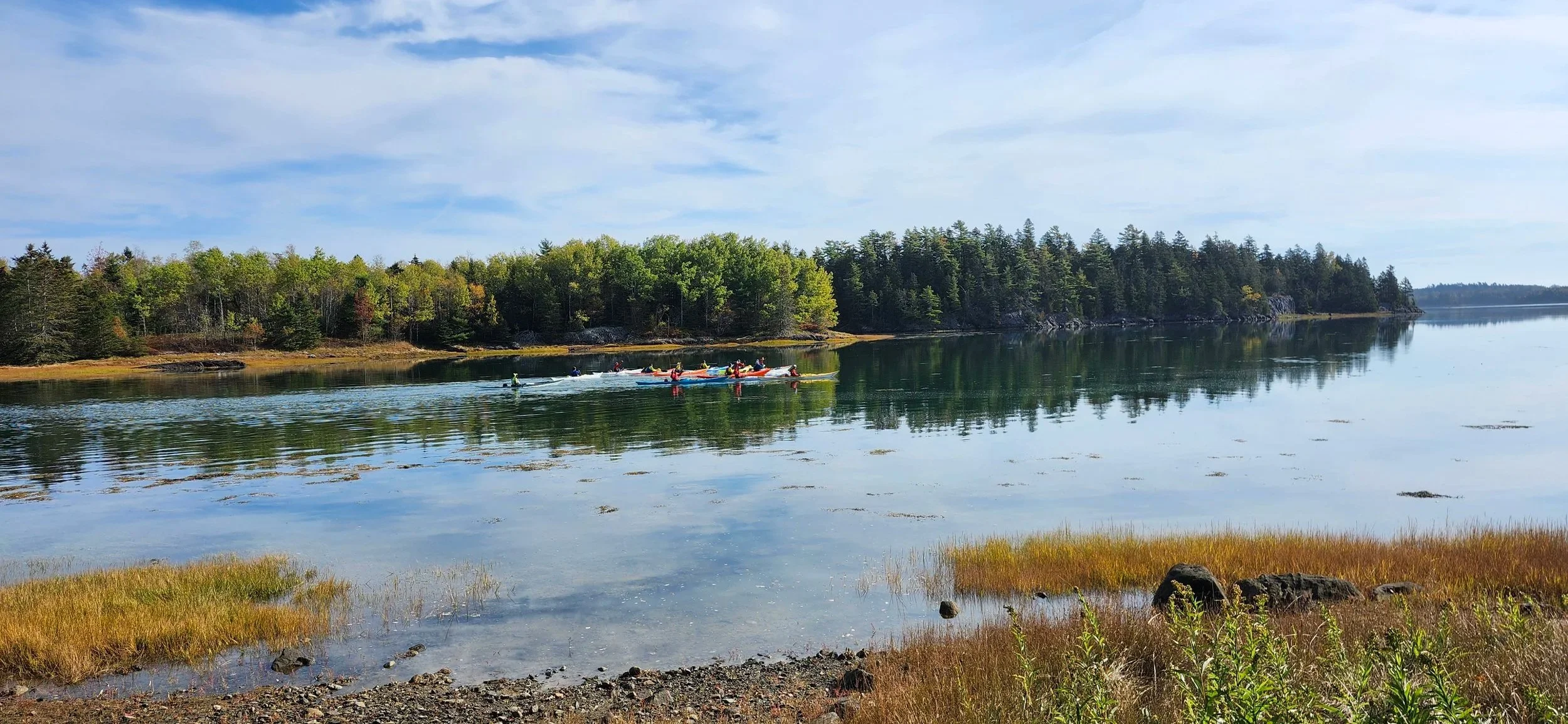
Yes! We have a few kayaks and canoes, and PFDs. For larger groups, we can suggest a rental company. Boating should only be undertaken with full awareness of the tidal impact.
Attractions and field study sites
-
Moosehorn National Wildlife Refuge encompasses nearly 30,000 acres of diverse habitats — salt marsh, freshwater marsh, bogs, streams, lakes, alder swamp, hardwood and pine forest, and rocky shoreline. Fifty miles of trails and roads wind through the refuge, offering excellent opportunities for wildlife observation.
Quoddy Head State Park sits at the tip of the easternmost point in the U.S., featuring a historic lighthouse and five miles of coastal trails. Highlights include dramatic ocean views, a peat bog with carnivorous plants, and exceptional wildlife watching — from nesting shorebirds to offshore whales.
Campobello Island in New Brunswick features the historic summer cottage of Franklin and Eleanor Roosevelt as well as hiking trails and beaches and hundreds of acres of natural areas. Passport required.
Cobscook Shores is a system of natural areas and hiking trails at 29 sites around Cobscook Bay.
Find out more:
-
For research, a permit from the Department of Marine Resources may be required.
For Moosehorn National Wildlife Refuge: No permit needed to visit, however if you plan to conduct research or demonstrate field techniques, you will need to submit an application for a special use permit. This is a simple process.
Research
-
CETL welcomes researchers and their students to our shores, fields, and forests. Our associate research scientists in marine biology, botany, and ecology are happy to help you develop and refine your research proposal.
Your stay
-
Our cabins:
No electricity: 3 two-person, 4 four-person
With electricity: 1 two-person cabin, 1 two-room cabin (sleeps 5-6)
We have a field for camping in tents and we have 2 RV pads with electric hookup (no water hookup). Tents and sleeping bags are available to borrow.
The dining hall/meeting space has WIFI and electricity. This building has heat and AC if needed.
-
A full kitchen is available for a one-time fee. The dining hall is equipped with a coffee maker, microwave, and refrigerator. You're welcome to prepare your own meals, or we can connect you with a caterer. Many groups choose to do a combination, such as bringing breakfasts and lunches and catering dinners.